| Jul 14 |
Survey in a sub-district
Reinout van Heiningen
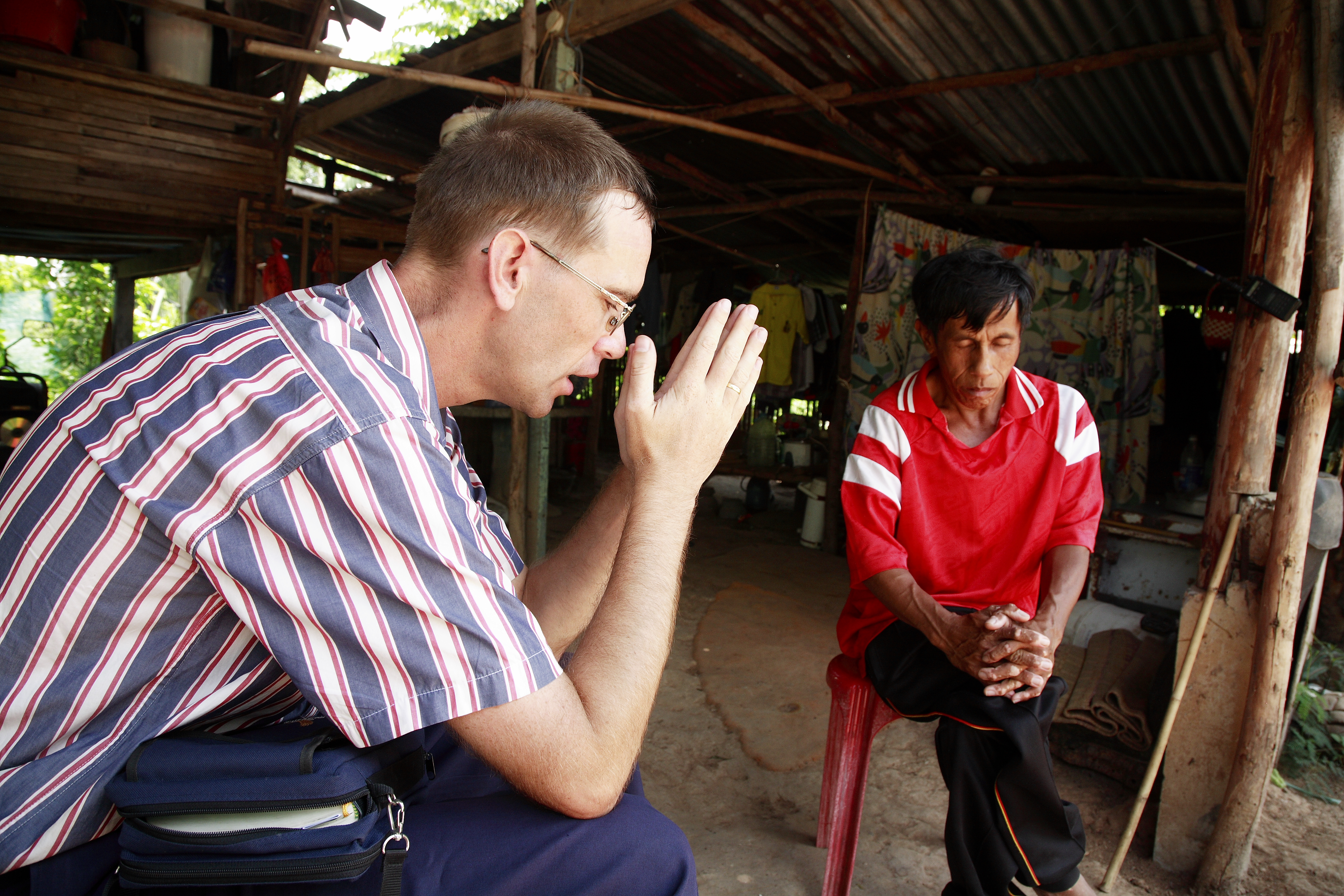
Since a couple of months we’re working in the Baan Faang district . This district has a few Christians, but the majority of the more then 50,000 people are still bound by Buddhism and Animism. God has opened a wonderful door in a small village in the South West of the district. In this village there are 3 women who are Christian. We go and teach them every week! There knowledge of the Bible is very limited,
Read more » |
| May 01 |
Young, non-traditional churches grow fastest
Marten Visser
Read more » |
| Apr 10 |
The importance of printed media
Marten Visser
30% of all new Christians said that no media played any role in their conversion. This shows that personal relationships are the driving force in evangelism, and that media can only play a supporting role. 10% said that radio (3%) or television (7%) played a role. This is remarkable for two reasons. First of all, it’s a low percentage. And second, there is much more Christian radio than Christian television. Yet television is influencing more people. The big surprise however was that 60% of the converts said that printed media played a role in their conversion. 17% mentioned an evangelistic tract. For every positive mention I ever heard about the evangelistic value of tracts, I am sure I heard at least ten negative ones in my life. Yet in Thailand evangelistic tracts were influential in the conversion of almost twice as many people as radio and television combined! The other 43% mentioned a book. This consisted of three equally large subgroups. The first group meant the Bible. The second a Christian book. And the third group mentioned both the Bible and a Christian book. Why would printed media be so much more effective in evangelism than broadcast media? Radio and television are much more intense, aren’t they? I do not know what the answer is. But I have two pretty good guesses. First, radio and television are literally broadcast. But Christian books are precision casted. They are mainly given in interactions between people. So they are better suited to support evangelism in personal relationships- and that is the main way that the Gospel spreads. Secondly, printed media offer the opportunity to re-read something that grabbed your attention. You can lay it down and come back to it later. That is another significant advantage while thinking about the important question whether or not to follow God. What an eye-opener! Even in a country like Thailand, where reading is not all that popular, printed media prove to be the most effective media in evangelism by far. It would be interesting to know how it is in other countries. Does anybody know? |
| Apr 06 |
Muslim, Bhuddhist, and Christian share one mat
Marten Visser
A church member chatted with a woman in a village about ten kilometers from where we live. In the past she had visited a church, and she wanted to know more about God. With four people from church we went to her village. We found the woman under a corrugated iron roof next to the main road. That was her shop. Her husband was at home as well. He was winding yarn onto a bobbin. Ten finished sets were hanging in the shop. It probably is a way to make some money, but it certainly won’t make him rich. Tuk, the wife, told us
Read more » |
| Mar 16 |
Driving a motorcycle in Thailand: a law of nature
Esther Visser
We were going to visit a lady with the three of us, Wongduan, Mali and me. Since a couple of weeks both Wongduan and Mali are totally immobilized because neither one of them has a motorcycle at the moment. Now they cannot go any place, life is very tiresome and inconvenient. Unfortunately,
Read more » |
| Mar 04 |
Open house
Marten Visser
Read more » |
| Feb 27 |
Sold as a five-year-old
Marten Visser
Much of her debt was with one lady in the village. In that family they needed someone to help in the house and in the shop. My mother took me to her to pay her debt. She told me: “She will make sure you have enough to eat.
Read more » |
| Feb 19 |
Training leaders? Use mentors, not teachers
Marten Visser
Read more » |
| Feb 15 |
Pig, Ham, and Bacon: come!
Marten Visser
To outsiders, the nicknames can have a funny ring. ‘Bird’ is the most common name, followed by ‘Small one’. From a western perspective, that is quite accurate to describe most Thai, yet something doesn’t seem quite all right when a sturdy guy with a beer belly is called ‘Small one’. Yet it is as common as hearing a teeny-weeny woman being addressed as ‘Fatty’.
Read more » |
| Feb 10 |
Isaan and Thai: Seek the differences
Marten Visser
For six years I lived among the Thai, and now since 3 years I am living among the Isaan. Isaan is a region of Thailand, the northeast, but it is much more than that. The Isaan have an identity that can clearly be distinguised from the Thai. Read more » |
| Feb 08 |
Becoming Christian in Thailand (1)
Marten Visser
1. Buddhists are less likely to become Christians than adherents of traditional religions. Everywhere in the world, adherents of traditional religions are becoming Christians in greater numbers than adherents of world religions. The same is seen in Thailand. Christianity grows very fast among the tribes (8% a year), and only moderately fast among the ethnic Thai (4% a year). 2. There is no difference in openness for the Gospel between
Read more » |
| Feb 05 |
Westerners are softies
Esther Visser
There has been a time that I wanted nothing else but pack my suitcases and hop on a plane back to the Netherlands. That was when we were still living in Bangkok. I hated everything there, from the oppressive weather to the narrow
Read more » |
| Feb 04 |
OMF-Isaan in student ministry?
Marten Visser
In the middle of Isaan is a university. It is located in the provincial town of Mahasarakham, and it still is a young university. It was only founded in 1994. Yet by now there are 42,000 students, almost as many as the official number of inhabitants of the town. A while ago I walked around on the campus of the university.
Read more » |
| Feb 03 |
The vote buying missionary
Marten Visser
I have an extra free evening. That’s not a reason to be glad, by the way. Since a few months I was teaching the Bible in a neighbouring village. It was a nice group. Often around 10 people showed up to hear the Bible stories. We had our meetings in the village shop, a corrugated iron shed. All passers-by could see what we were doing, and could easily join in. But it’s over now. Why? Because I’m rumoured to have bought votes in the village head election.
Read more » |
| Feb 02 |
10 commandments to fail as a churchplanter
Marten Visser
|
| Jan 25 |
Module out
Reinout van Heiningen
During the first year in Lopburi every student has to complete 9 modules. Eight of these modules are studied within the OMF Language School. One module…your 8th or your 9th is studied with an outside language helper.
Read more » |
| Nov 27 |
Tailor 3
Jose van Eeken
Do you still remember our friend the Tailor? This group (pii Faay and friends) started to get more body and more and more children were coming to listen to the bible stories and do a craft. They really liked it and were always full
Read more » |
| Nov 03 |
Help…a foreigner
Reinout van Heiningen
Yesterday we wanted to buy a little three-wheel bicycle for our 1 year old son. We went over to one of the shops selling those kind of things and saw some of the little bikes standing outside. While we were looking at them, two girls that worked in the shop were looking from a distance. We heard them talk to each other about ‘the foreigners’. We could
Read more » |
| Oct 15 |
Who will take the gospel to the people in Kaeng Khro?
Marten Visser
This week I visited Mong and his relatives. I explored whether
Read more » |
| Oct 06 |
Climbing step by step
Reinout van Heiningen
After you learn reading and writing in Module 4 there’s another module to wrap up all you’ve learned so far. Module 5 is all about having conversations on different subjects. It’s quite a range of subjects: Meeting people at the market, booking a hotel room, applying for a library card, ordering gas, renting a house etc.
Read more » |
| Sep 30 |
Read, but don’t stop listening
Annelies den Hartog
A few months ago, we were at Bible college. One of the advantages of this Bible college is an Asian lector who has been a Buddhist for 20 years. At University he became a Christian, served the Lord in different countries and is now teaching at an English Bible college. One of the modules he is teaching is Buddhism….we were eager to learn as much as possible. I will never forget his first lecture. He said that we can learn a lot about Buddism from books, absorb the theory and fill us with every detail. But if you talk with Buddhists never pretend that you know what they believe. The theory, beliefs and practice of this in daily life seem not always to match with each other. Knowledge is very good, but you have to relate to the people if you really want to know how the theory worked out in their lives. Then you will know how to connect to them in telling the Gospel of Jesus Christ. |
| Sep 18 |
What’s in your ear?
Jan van Eeken
Waaniet is a joyful man who lives in a small village just outside our little bit bigger village. His wife is a Christian and I think he is as well. I study the chronological bible study with him. He understands lost of things in is own simple way. Last week we talked about the snake who told Eva to eat the fruit. After the lesson he explained to me that that was the problem of today as well. He said it feels like Satan is constantly talking in my ear and that of the people in the world. But when he has this feeling he prays to God that he can do his will. I went back home and this time I was the one that learned a lesson! |
| Sep 09 |
Tailor 2
Jan van Eeken
Remember the tailor who was interested in the gospel? Last week my wife went there again but this time she had bad news. She can not become a Christian because then she is not allowed to go to the Buddhist temple anymore, but my wife was still allowed to come and teach the bible. |
| Aug 29 |
A church half-empty or half-full?
Marten Visser
Read more » |
| Aug 14 |
The tailor
Jose van Eeken
A few weeks ago I went to a local tailor to have some trousers made. She took my measurements and said that it would be ready in two days. When I came to collect the trousers,
Read more » |
In what kind of church do many outsiders come to faith in Christ? My research among Thai churches, had a surprising outcome. There are two things that tell you about everthing you need to know about the growth potential of a church. Only two things.
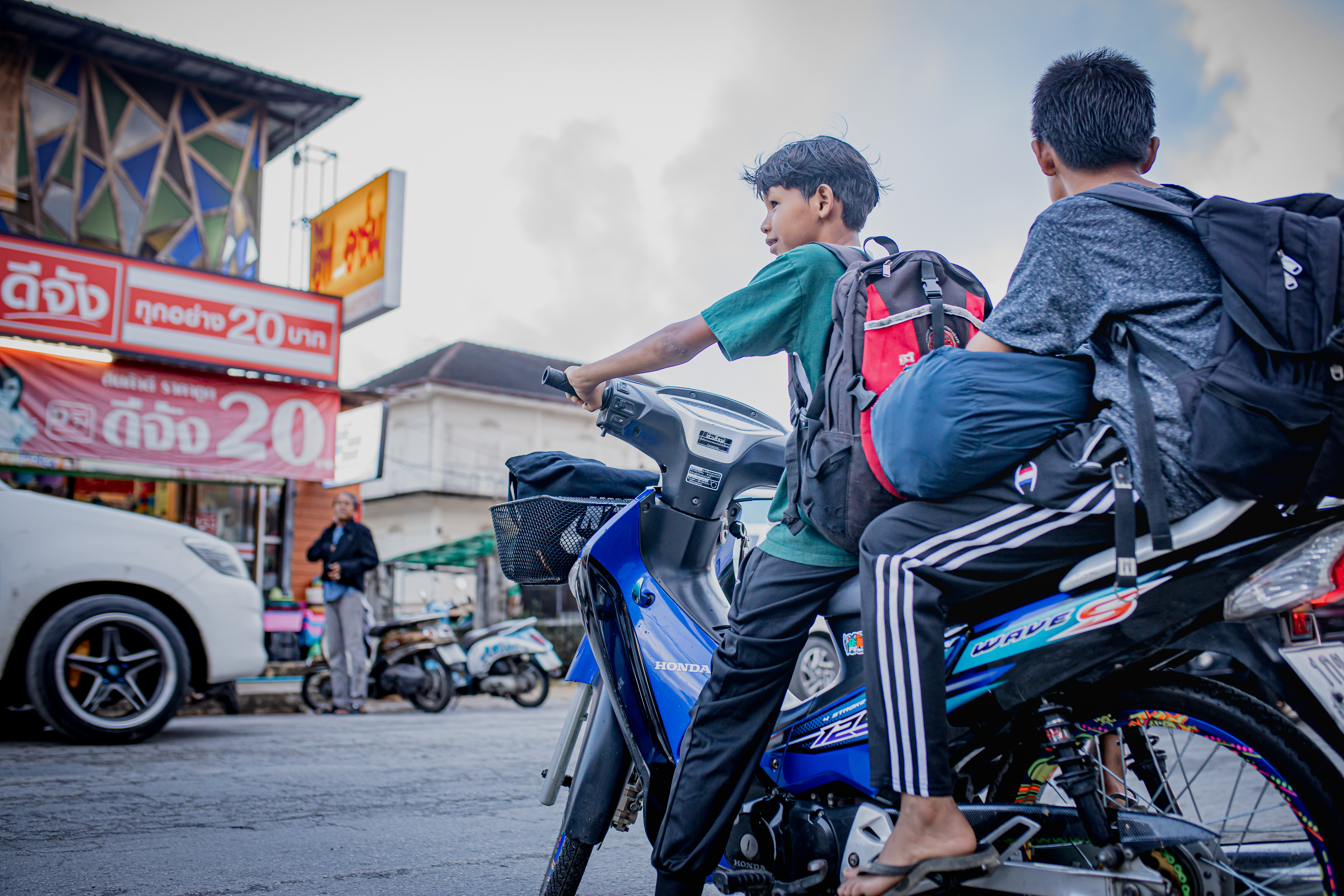
In Thailand going from one place to another is done by motorcycle. That is a law of nature from which you don’t deviate or it could be detrimental to your health. So if your motorcycle is broken or a motorcycle is not available to you for whatever reason, you are really bound hands and feet. Last Sunday this crystal clear truth became very clear to me.
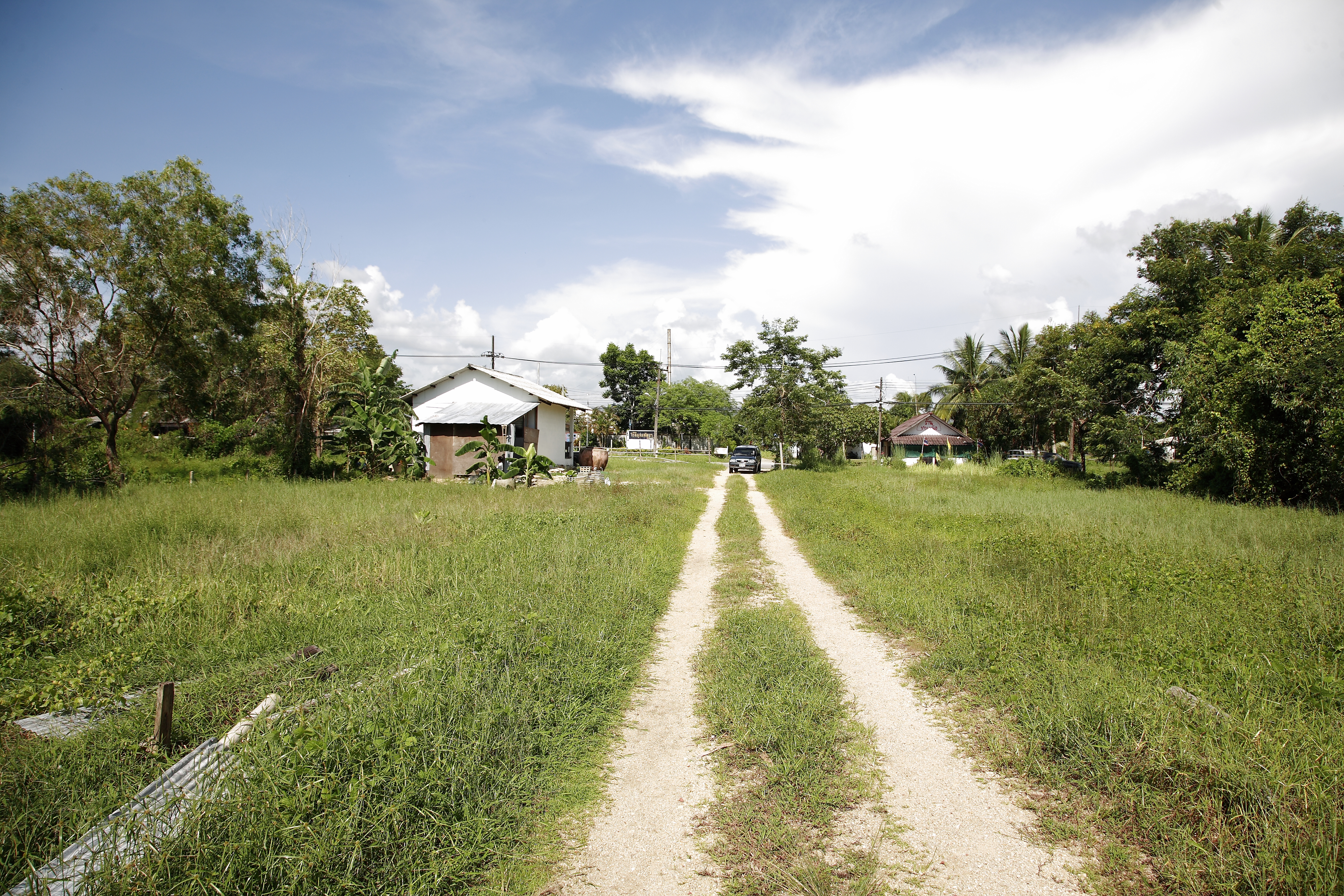
We are living in a house without windows. Well, at least partially: our kitchen and home and living room do not have walls. So we are always outside. We don’t see walls, we see the world. We enjoy the nature around us. Birds and insects fly through our house. We see the woodpecker in the tree at the other side of the road and hear its pecking. The scent of jasmine is everywhere.
“I do not remember my father. Not long after I was born, he left the family. My mother tried to take care of me as good as possible. She had some land, that she sold bit by bit. But her debts kept growing.
How do you work yourself out of a job as missionary? By making sure local Christians can lead the church as soon as possible, and are taking responsibility for further church planting. But how do you do that? It is one of the big questions almost all missionaries struggle with. Daniel McGilvary, the apostle of Thailand, has the following suggestions in his almost 100 year old autobiography.
Thai people have beautiful names. Only they are seldomly used. They are written in documents and said at official occasions. But in everyday life, only the nickname is used.
A team member asked me: what are the most common mistakes starting church planters make? It wasn’t totally clear to me why he considered me a particularly good source for information of that sort. However, here is my recipe to fail as a missionary church planter:
Mong lies on a tiny bamboo bed for 24 hours a day. His head has a normal size, but for the rest he has a miniature body that he can hardly use. So it is not miraculous that for years on end Mong was depressed. But the miracle is that this is no longer the case! Mong lives in Kaeng Khro, an Isaan district with over 90.000 people. A Thai YwaM team shared the Gospel with him, and he came to the Lord. Recently during an evangelistic outreach in his village some other people also expressed interest in the Gospel.
“The church building is half-full, we’re not doing too bad”, pessimists say. Optimists think: “The building is half-empty, so there’s lots of room to grow!” At the beginning of this year there were conflicts in the church we planted in Bangkok. About half of the members left. “It’s like a tsunami”, one of the remaining members told me. “You look around, and all of a sudden this one is gone and that one is gone.” Experiences like these in a church are always sad and dishonour God’s name. Yet after half a year I also see the other side of the medal.